
Would you rather own a portfolio…or own the machine that creates them?
The hidden advantage is not intelligence, effort, capital, education, or luck.
It is understanding that a business is not merely a source of income. It is an asset that can be deliberately engineered to become increasingly valuable.

Executive brief
We are operating in an unusually fragile financial environment. Government and corporate debt loads are elevated. Bond markets remain sensitive to rate and inflation surprises. Public equities are priced at historically high multiples largely supported by liquidity rather than fundamentals.
Geopolitical shocks in the Middle East periodically disrupt energy prices and supply chains. Artificial intelligence is reshaping labour and customer acquisition economics, advantaging scaled players while compressing margins for smaller firms that rely on manual marketing and sales.
The risks are clear: owners face margin squeeze and volatility; lenders and investors face higher default and write‑down risk; teams and communities bear the cost when businesses wobble.
In this context, the rational move is to build the only asset you can control: a durable, profitable business that throws off cash predictably, is attractive to A‑players, and can be sold, bequeathed, or used as collateral and a platform for acquisitions.
Getting there requires doing the right work in the right order.
This report explains why three workshops:
The Half‑Day Profit Breakdown, SANDOR client acquisition, and Marketing Fundamentals, provide the foundations for a fourth step (scalable systems installation) and a fifth (growth by acquisition, partnerships, and joint ventures).
The logic is axiomatic: fix the money; fix the engine that creates demand; fix the strategic position that governs price and preference; then lock the results into a scalable operating system; finally, compound via deals.
Why conventional approaches fail
The popular playbook is: pick a niche, do some “research,” post content everywhere, hope for followers, and sell by hustle. Owners following this path often create a lifestyle job that pays an income but never becomes an enduring asset.
Unit economics are unclear, cash conversion is slow, positioning is indistinct, and nothing is systemised. This increases risk to owners (burnout, low valuation), to lenders (unreliable cash flows), to brokers and buyers (failed diligence), to teams (instability), and to communities (fragile employment and tax bases).

The workshops sequence: What changes, for whom, and why it is safer
- Half‑Day Profit Breakdown – Fix the money
Goal: increase profit now, strengthen cashflow, and reduce overhead without harming quality.
What happens:
- You identify hidden profit leaks and pretty losers (offers or customers that look busy but destroy cash).
- You improve price realisation (the actual price collected versus list), adjust mix towards high contribution margin offers, and set discount guardrails.
- You shorten the cash conversion cycle in days (the average time from spending on delivery to collecting cash) by invoicing same‑day, tightening terms, and installing two‑touch collections.
- You reduce overhead by eliminating spend with no return while protecting producers.
Why this is foundational: clean, normalised profit and faster cash conversion reduce financing needs and default risk. Lenders underwrite faster at better terms. Families feel payroll certainty. Business brokers can credibly represent earnings quality. Communities see steadier employment and tax payments.
- SANDOR – Fix the client acquisition system
SANDOR is a simple, repeatable consulting and diagnostic model used to increase revenue and reduce overwhelm:
- S: Specific outcome. Shift from firefighting to a clear, measurable revenue goal.
- A: Assets. Inventory the moving parts that already exist (offers, lists, audiences, campaigns, sales processes, relationships).
- N: Numbers. Gather the few numbers that matter (prices, margins, conversion rates, average order value).
- D: Diagnosis. Identify the small number of levers creating most revenue—and the noise that isn’t.
- O: One‑step action plan. Prescribe one precise action that drives the outcome now (for example, a show‑up sequence for booked calls; a deadline sequence for cart abandoners).
- R: Review and repeat. Measure the result, keep what works, change one thing, and loop.
Why this is foundational: client acquisition ceases to be guesswork. You lower your customer acquisition cost payback period (how quickly gross profit repays acquisition cost) and raise the lifetime value to customer acquisition cost ratio (total gross profit per customer divided by acquisition cost). Predictable funnels reduce lender risk, attract A‑players, and give brokers and buyers a repeatable growth story.
- Marketing Fundamentals – Fix strategic positioning
Strategic marketing is the blueprint (why, who, what, where, and how you win). Tactical marketing is the build (the channels and executions). The workshop forces you to:
- Define the ideal customer and a single avatar you will serve best.
- Articulate hot buttons (what customers actually care about), separating benefit‑based, objection‑based, and competition‑based triggers.
- Innovate everything the business does around these hot buttons so it serves the market better than any other business in the industry or profession and becomes the only choice, by default.
- Eliminate platitudes (“quality service”, “we care”) and replace them with specific, proof‑backed claims.
- Decide your position (low cost, best value, or absolute best) and align messaging, offers, and guarantees to make “more expensive” feel “safer” and “smarter”.
- Create comprehensive marketing synergy so every medium carries the same hot‑button message and look, compounding effect across channels.
Why this is foundational: positioning governs price and preference. When you speak to real hot buttons with proof, you command premium margins, reduce discounting, and increase close rates.
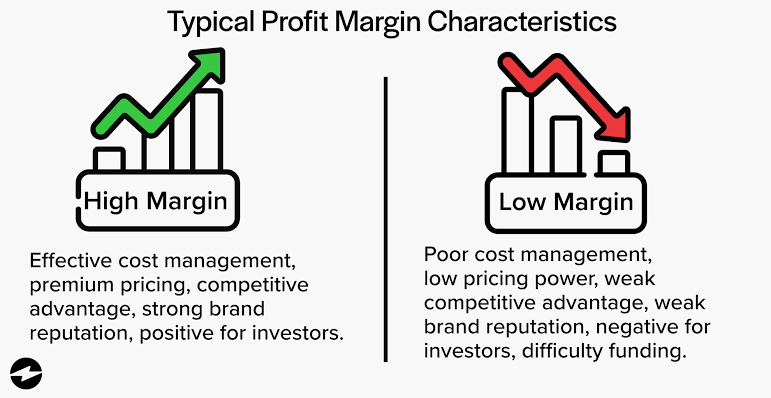
This increases enterprise value and resilience—benefiting owners (higher profits), teams (clarity), banks (margin durability), brokers (higher multiple), and communities (stronger anchors).
- Install a scalable system – Make results repeatable
With profit, demand, and position set, you install a single source of truth and cadence so the business runs predictably:
- Document processes in short, visual standard operating procedures (who, outcome, steps, guardrails, checklist, and linked metric).
- Create role scorecards so every key number has one directly responsible individual and a review rhythm.
- Build playbooks for marketing, sales, delivery, finance, and hiring so high‑output teams execute the same way every time.
- Set decision protocols (who decides what, at what threshold) to reduce bottlenecks and key‑person risk.
- Run weekly operating reviews using scorecards; monthly operating reviews to adjust plans and documentation; quarterly constraint reviews; and an annual transferability drill (prove the business meets plan while the owner is away for two weeks).
Why this locks in stability: variability falls, errors and rework drop, forecasts improve, and key‑person risk collapses. Lenders and investors see a governed machine. A‑players are attracted to clarity and career paths. Business brokers can present a company that survives diligence and performs through transition. Families inherit or sell an asset, not a job.
- Grow via acquisitions, partnerships, and joint ventures – Compound safely
Once the core machine is stable and documented, you can bolt on growth:
- Use your cashflow, systems, and position to acquire complementary firms, expand geography, or secure supply/distribution.
- Form joint ventures to access customers at lower acquisition costs.
- Partner for capabilities you do not need to build in‑house.
Why in this order: acquisitions magnify whatever exists. If you have leaks, you scale chaos. If you have profit discipline, a demand engine, a strong position, and a documented operating system, you scale value.
What the system measures (in plain English) and why it matters
- Owner‑free revenue percentage: the share of revenue that arrives without the owner in sales or delivery. Higher is better; it proves independence and raises valuation.
- Cash conversion cycle in days: how long it takes to turn spend into collected cash. Shorter is safer and reduces financing needs.
- Contribution margin by offer: profit after direct costs, before overhead, per product or service. Focus where cash is truly created.
- Recurring revenue percentage: the portion of total revenue that repeats automatically via subscriptions or contracts. Predictability lifts planning quality and valuation multiples.
- Top‑client concentration: the share of total revenue from your largest customer. Lower dependence reduces risk for you and for lenders.
- Customer acquisition cost payback period: time for gross profit to repay acquisition cost. Faster payback frees cash to scale.
- Lifetime value to customer acquisition cost ratio: total gross profit per customer compared to cost to acquire. Higher ratios signal efficient growth.
- Price realisation: actual price achieved versus list after discounts. Strong realisation shows pricing power from good positioning.
- Standard operating procedure coverage: percent of revenue earned through documented processes. Higher coverage proves transferability.
- Time‑away test: whether the business hits plan when the owner is absent for two weeks. Passing this shows real owner‑independence.
Benefits by stakeholder
- Business owners and families: more cash now, less stress, an asset that can be sold, refinanced, or bequeathed. Family wealth is protected from market volatility because the business—the controllable asset—produces cash predictably.
- Banks and financial institutions: cleaner, faster underwriting and lower default risk from documented controls, recurring cashflows, and proven independence. Better borrowers at better terms.
- Business brokers and consultancies: inventory of saleable companies that clear diligence and command stronger multiples. Consulting engagements deliver measurable, durable improvements.
- Service businesses, accountants, and lawyers: clients with clear scopes, timely payments, and higher‑value advisory needs. Less emergency clean‑up; more strategic work.
- Business teams: clear goals, playbooks, and career paths. Higher morale, better retention, and the ability to recruit A‑players.
- Communities, local and central governments: stable employers, steadier tax bases, apprenticeship pipelines, and fewer crisis interventions. Strong firms strengthen main streets.
- Investors and partners: a platform with reliable cash, clear unit economics, and a documented machine that can absorb capital and bolt‑on acquisitions.
Consequences of ignoring the order
If you skip profit discipline, growth burns cash and debt costs rise. If you skip the demand engine, you depend on luck and discounting. If you skip positioning, you fight price wars and erode margins. If you skip documentation, results depend on a few people and collapse when they leave. If you then attempt acquisitions, you scale chaos. The end state is owner burnout, lender losses, failed deals, team turnover, and communities absorbing avoidable shocks.
Broad steps to implement
Half‑Day Profit Breakdown: line‑by‑line profit review; raise prices where justified; remove low‑margin options; kill spend without return; install same‑day invoicing and a two‑touch collections cadence; publish pricing and discount guardrails; assign a finance scorecard owner.
- SANDOR: define the specific outcome; inventory assets (offers, lists, campaigns, processes); capture the few numbers that matter; diagnose the real levers; prescribe one step; review and repeat. Install show‑up, reactivation, and deadline sequences as low‑effort, high‑return “bolt‑ons.”
- Marketing Fundamentals: select an avatar; list benefit, objection, and competition hot buttons; remove platitudes; innovate offerings based on hot buttons; craft proof‑backed claims; choose position; align offers and guarantees; enforce comprehensive marketing synergy across channels so messages look, sound, and feel the same.
- Scalable system: build a single source of truth with SOPs, role scorecards, playbooks, decision protocols, and operating reviews; tie every key metric to one owner and one page; train to the page; improve pages based on measured results.
- Growth by deals: define acquisition criteria; document integration playbooks (finance, systems, people, brand); structure partnerships and JVs that exploit your strongest levers first.

Why this is safer in today’s environment
In an economy marked by high debt loads, sensitive bond markets, liquidity‑inflated stock valuations, geopolitical shocks, and AI‑driven competition, the controllable advantage is a documented, positioned, cash‑rich operating machine. It reduces exposure to external volatility for owners, lenders, and local communities alike.
A final, practical thought…
List the three most valuable changes a prudent lender, a serious buyer, and your best employee would require before extending credit, wiring funds, or committing their career.
If those changes are not already scheduled, put them in your calendar now under Step 1 (profit), Step 2 (client acquisition), or Step 3 (positioning). Then capture them in Step 4 (systems) so they endure—and use Step 5 (deals) only after the machine runs. The order is the edge.
The hidden advantage is not intelligence, effort, capital, education, or luck.
It is understanding that a business is not merely a source of income. It is an asset that can be deliberately engineered to become increasingly valuable.
Business Alchemy Capital Architecture™ is the only organisation on the planet with all of these strategies and tools and which also serves SMEs. We have been developing our programs for over 20 years and are expanding onto 5 continents this year, creating an ecosystem of businesses and services you can absolutely rely on because every one of them has been through this program.
This means you get to access and serve a global market and all the benefits which come with that. Including reduced currency risk, true diversification and global market access.
Thank you for being here.
Mike Noone, July 2026.