
By the Arc-fi.ai Team
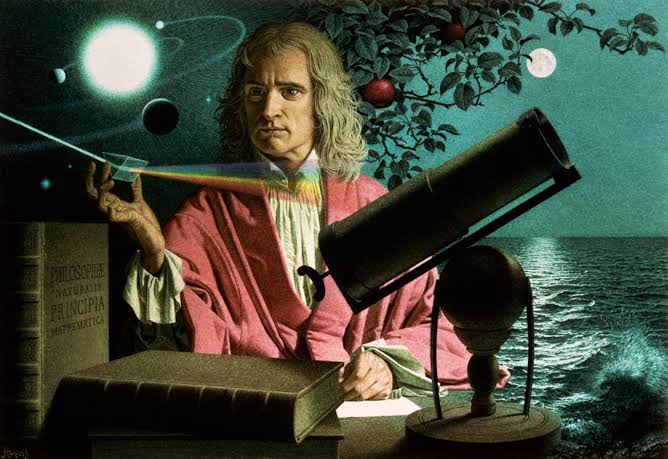
“I can calculate the motions of the heavenly bodies, but not the madness of the people.” — Sir Isaac Newton, 1720
The smartest man in the world said that. And he was right. He had just lost the equivalent of over $3 million in today’s money — not because he couldn’t do the math, but because he couldn’t control the emotions. He’d made a cool 100% profit on South Sea Company stock, sold out, watched it keep going up, got FOMO, bought back in at the top… and lost everything.
Sound familiar?
The Same Story, Different Century
Newton’s tale isn’t unique. It’s the same damn story playing out over and over:
1637 — The Tulip Bubble. Dutch speculators went absolutely insane over flower bulbs, with a single Viceroy bulb reportedly trading for two lasts of wheat, four fat oxen, eight fat swine, twelve fat sheep, two hogsheads of wine, four tons of beer, two tons of butter, 1,000 pounds of cheese, a complete bed, a suit of clothes, and a silver drinking cup — total value: 2,500 florins. At the peak, some bulbs sold for more than ten times the annual income of a skilled craftsman. Then it collapsed. The “madness of crowds” in full effect.

1720 — Newton and the South Sea Bubble. Our boy Isaac jumps back in at the worst possible moment, loses £20,000, and forbids anyone to speak the words “South Sea” in his presence for the rest of his life. The world’s greatest scientist, reduced to a superstitious wreck by market psychology.
1929 — The Great Depression. Greed drove the quest for quick capital gains rather than medium-term dividends. Buying on margin, overleveraging, everyone convinced they’d found a “new era.” Then came the crash, and for the next decade, the same emotional pendulum swung the other way — excessive gloom, resentment, and a decade of depression. As one lawyer wrote in his diary during the Depression: “In 1928 people were excited about big profits… Today their outlook is gloomy, they think the depression will never end… Just as the public was mistaken in its excessive optimism of 1928, I believe it is mistaken in its excessive gloom”

The Emotional Cycle Never Changes
Markets are driven by human beings, and human beings are driven by emotions: fear, greed, hope, overconfidence, resentment, panic. The cycle is always the same:
- Optimism → Overconfidence → Greed
- Everyone jumps in
- Panic selling
- Anger and resentment
- Underconfidence
- Repeat
And every single time, the smartest people with the best data get swept up in it. Newton could calculate planetary orbits. Roth’s diary shows experts were consistently wrong throughout the Depression — “None of them foresaw the 1937-39 collapses… Use your own judgment and do your own thinking”. But doing your own thinking is exactly what humans are bad at when everyone else is yelling.
The Solution: Remove the Human
This is where Arc-fi.ai comes in.
The problem isn’t intelligence. It’s temperament. Warren Buffett put it perfectly: “Investing is not a game where the guy with the 160 IQ beats the guy with the 130 IQ… Once you have ordinary intelligence, what you need is the temperament to control the urges that get other people into trouble in investing”.
But why rely on temperament at all when you can eliminate it completely?
Arc-fi.ai’s proprietary AI-brain represents the next generation of trading infrastructure — fully autonomous, precision-driven arbitrage execution across global digital markets. Our system doesn’t get FOMO. It doesn’t panic. It doesn’t watch the guy next to you get rich and think “I should buy at the top.”
Here’s how it works:
- 24/7 Autonomous Operation: While you sleep, our AI processes every arbitrage opportunity — spread percentages, price differentials, projected profit — without emotional interference.
- Intelligent Validation: Every opportunity is analyzed against risk assessment, volatility analysis, market depth, and liquidity considerations. No “I have a good feeling about this” — just cold, hard data.
- Smart Execution: When conditions are met, trades execute instantly. No hesitation. No “waiting for the right moment.” No manual intervention.
- Sentiment-Aware, Not Sentiment-Driven: Unlike the tulip traders or Newton himself, our AI analyzes market sentiment rather than being victim to it. It can detect when the crowd is irrational but isn’t swayed by that irrationality.
The Bottom Line
Newton couldn’t do it. The tulip traders couldn’t do it. The 1929 speculators couldn’t do it. And you probably can’t either — because you’re human.
The world’s greatest scientist couldn’t beat the emotional cycle. What chance do the rest of us have?
That’s why you need Arc-fi.ai. Not a tool. Not a “suggestion engine.” A fully autonomous AI trading brain engineered to simulate, learn, and deploy intelligent arbitrage strategies across multiple trading environments — without the madness of men getting in the way.
Stop trading on feelings. Start trading on intelligence.
For more info click here